
The World’s Toughest Row: What Does It Really Take to Cross an Ocean?
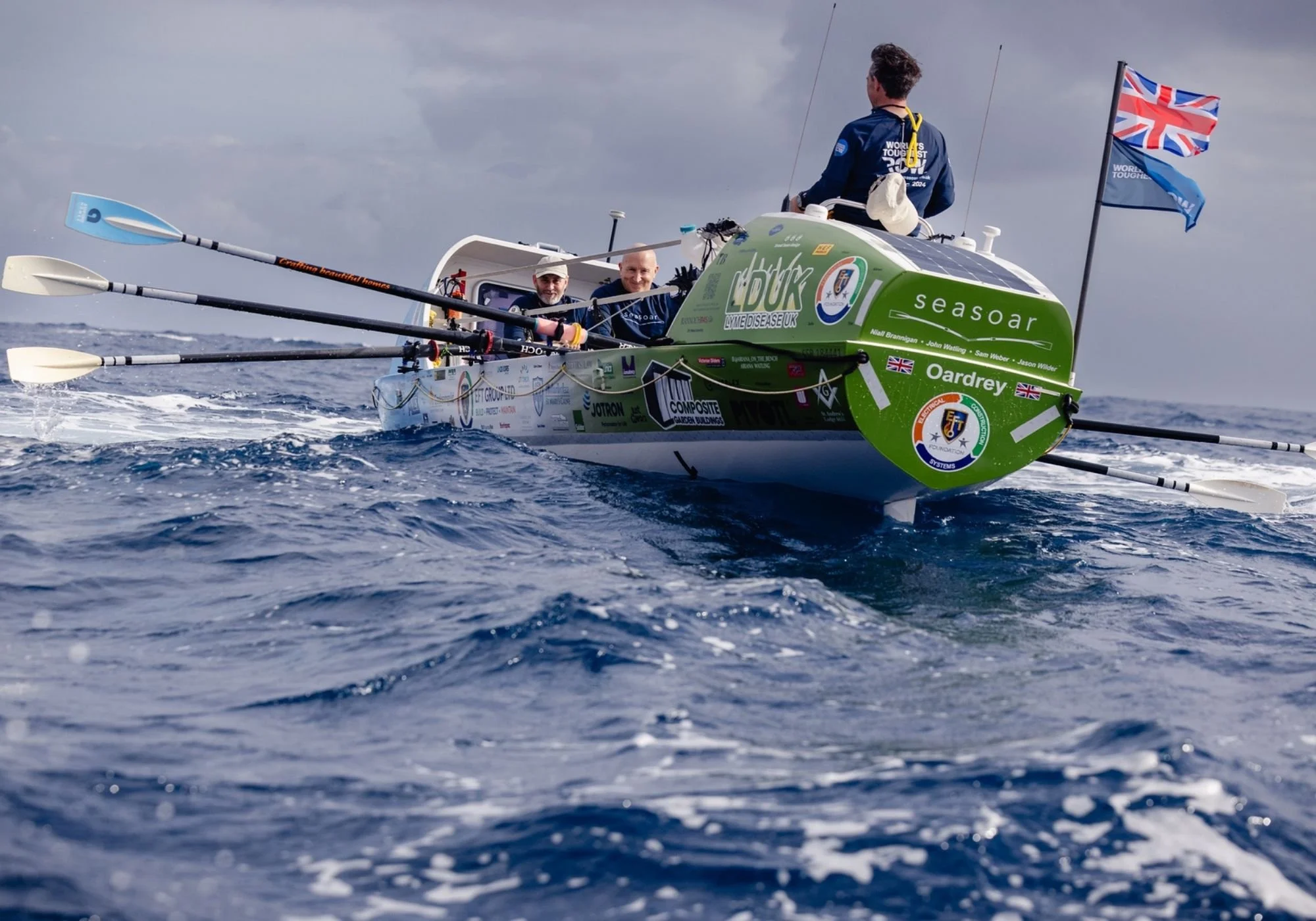
Imagine setting off from the Canary Islands with nothing ahead of you but 3,000 miles of Atlantic Ocean — powered only by your own strength and determination.
That is the challenge at the heart of The World’s Toughest Row – Atlantic, one of the most demanding endurance events on the planet. Each December, crews leave San Sebastián de La Gomera in the Canary Islands and race west across the Atlantic to Nelson’s Dockyard in Antigua.
There are no stages, no nights in hotels and no opportunity to simply stop when you have had enough. Once the race begins, the ocean becomes home.
More Than 3,000 Miles of Open Ocean
The route stretches for more than 3,000 miles from La Gomera to Antigua, taking competitors away from land and into one of the largest expanses of open water on Earth.
Crews can spend many weeks at sea. Previous crossings have ranged from extraordinarily fast finishes of around a month to journeys lasting well beyond two months.
Throughout that time, rowers have to cope with:
Powerful Atlantic swells and rapidly changing weather
Extreme heat and exposure to the sun
Exhaustion and severe sleep deprivation
Salt sores, blisters and physical fatigue
Equipment failures and repairs at sea
Isolation and the psychological challenge of weeks without land
Living, eating and sleeping in an exceptionally confined space
And, of course, there is the rowing itself.
Row. Eat. Sleep. Repeat.
For crews, life at sea quickly develops its own relentless rhythm.
The boat needs to keep moving throughout the day and night, meaning teams generally organise themselves into rotating rowing and resting shifts. While one person rows, another may be sleeping, eating, preparing equipment or carrying out essential maintenance.
There are no conventional bedrooms or bathrooms. Everything needed for the crossing — food, equipment, navigation systems, safety gear and water-making equipment — has to fit aboard the rowing boat.
Even seemingly simple everyday tasks become considerably more difficult when your home is being thrown around by Atlantic waves.
A Huge Mental Challenge
Physical fitness is only part of what makes The World’s Toughest Row so difficult.
Competitors must remain motivated through weeks of repetition, discomfort and uncertainty. They may encounter days when progress is frustratingly slow, equipment breaks, conditions deteriorate or exhaustion begins to take its toll.
For pairs and teams, there is another challenge: living in an extraordinarily small space with the same people, 24 hours a day, while everyone is tired and under pressure.
Success requires resilience, teamwork, patience and an ability to keep going when stopping would be considerably easier.
Preparation Starts Long Before the Atlantic
Crossing an ocean safely requires far more than simply being able to row.
Before reaching the start line, competitors undertake extensive preparation covering areas including ocean rowing, navigation, first aid, communications, safety procedures, equipment maintenance and emergency situations.
The organisers describe safety and technical preparation as fundamental to giving crews the skills they need to deal with problems independently while at sea.
Months — and often years — of physical training, fundraising, logistics and planning can therefore go into a challenge that may ultimately be decided by what happens thousands of miles from land.
Why Do People Do It?
Perhaps the most interesting question is not how someone rows across the Atlantic.
It is why.
Teams enter The World’s Toughest Row for many different reasons: adventure, personal achievement, world records, proving what they are capable of or marking an important moment in their lives.
For many crews, however, there is also a bigger purpose.
The extraordinary nature of an Atlantic crossing provides a powerful platform for fundraising and awareness. Teams have used their journeys to support charities, medical research, community projects and causes with deeply personal connections.
That transforms every mile into something more meaningful.
One Ocean. Thousands of Miles. An Extraordinary Challenge.
Eventually, after weeks surrounded almost entirely by water, Antigua appears on the horizon.
For those who make it across, reaching English Harbour means more than finishing a race. It represents thousands of miles rowed, countless hours without proper sleep and an extraordinary test of physical and mental endurance.
The World’s Toughest Row is called that for good reason.
More than 3,000 miles. No engine. No shortcut. Just a rowing boat, an ocean and the determination to reach the other side.